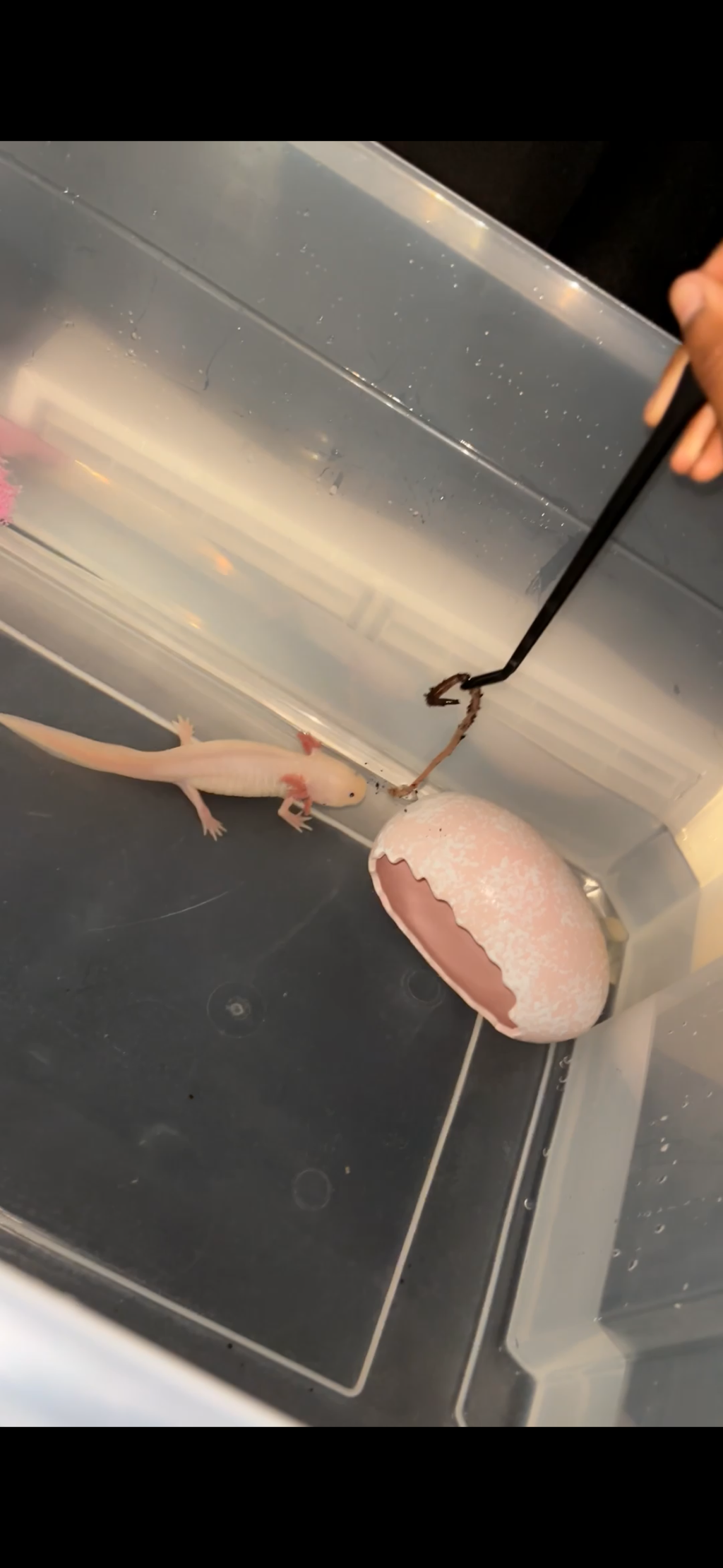
RO water gives you control over your starting water, but it also removes much of the mineral content and buffering that an aquarium needs. The useful question is not “Which bottles should I pour in?” It is “What does this batch of water need after I test it?”
Our Axolotl RO Water Kit groups three water-preparation products in one place. It is a set of tools for measured preparation, not an instruction to add a full dose of every product to every bucket.
GH, KH, pH and TDS measure different things
| Measurement | What it helps you understand |
|---|---|
| GH: general hardness | The hardness associated mainly with calcium and magnesium. |
| KH: carbonate hardness or alkalinity | The water's buffering capacity, which helps resist pH changes. |
| pH | How acidic or alkaline the water is at the time you test it. |
| TDS | A broad indicator of dissolved material. It does not identify which minerals are present. |
A TDS meter cannot tell you that GH or KH is correct. Two batches can have similar TDS readings and different mineral compositions. Keep separate GH, KH and pH tests in your preparation routine.
What is included in the RO Water Kit?
The kit contains Florin Delta GH+ 250 g, Florin Delta KH+ 250 g and Remineraliz 250 mL. Confirm the current product listing before ordering.
- Florin Delta GH+ supplies minerals used to adjust general hardness.
- Florin Delta KH+ increases alkalinity or buffering.
- Remineraliz replenishes minerals removed by purification.
GH+ and Remineraliz have overlapping mineral contributions. Treating them as unrelated ingredients and automatically adding full doses of both can overshoot your intended water chemistry. Start with your source-water results and account for every addition.
A practical preparation routine
- Use a clean, aquarium-only container and measure the actual replacement-water volume.
- Test the starting water and write down GH, KH, pH and temperature. Check your RO system's performance rather than assuming every batch is identical.
- Choose a preparation plan based on the readings, your established aquarium and the current product labels. Ask our team to review the plan if the products overlap.
- Measure additions accurately, mix thoroughly and allow the water to circulate. Follow the label's mixing and retesting instructions.
- Retest GH, KH and pH. Record the product amounts and final results.
- Match replacement water to the aquarium's intended temperature and chemistry before performing the water change.
Mineral products do not replace a chlorine/chloramine conditioner when one is required for the water source. They also do not replace the biological filter or establish a nitrogen cycle by themselves.
Avoid changing several variables at once
If pH is different from what you expected, check KH, source water, test technique and the aquarium's recent history before reaching for another additive. A log makes it much easier to see whether a change came from a new water source, a measurement error or an extra supplement.
For a new aquarium, prepare the water before starting the fishless cycling process. For an established tank, review the axolotl care guide and keep changes gradual and measured.
Do you need this kit if you use tap water?
Not automatically. Tap water may already contain substantial GH and KH. Test it first. Adding a remineralizer simply because you own one can move suitable water away from the conditions you intended.
Compare mineral and hardness supplements or browse water preparation and filtration supplies. When asking for help, include tank volume, source-water and aquarium test results, and a list of products already used.
Product references
Reviewed October 15, 2026. See Brightwell's current directions for Florin Delta GH+, Florin Delta KH+ and Remineraliz. Product instructions describe their freshwater applications; this guide does not imply manufacturer certification for axolotls.