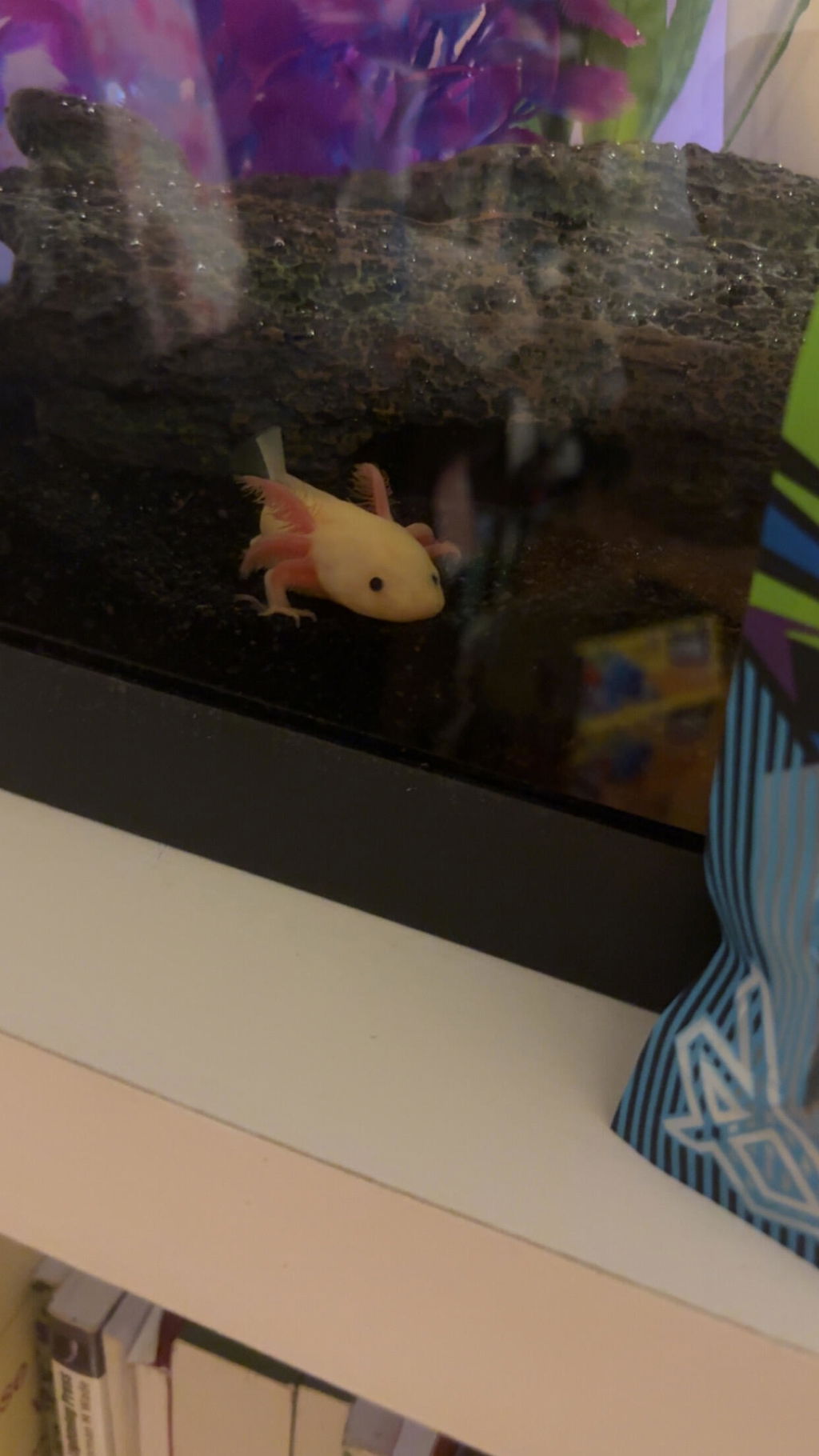
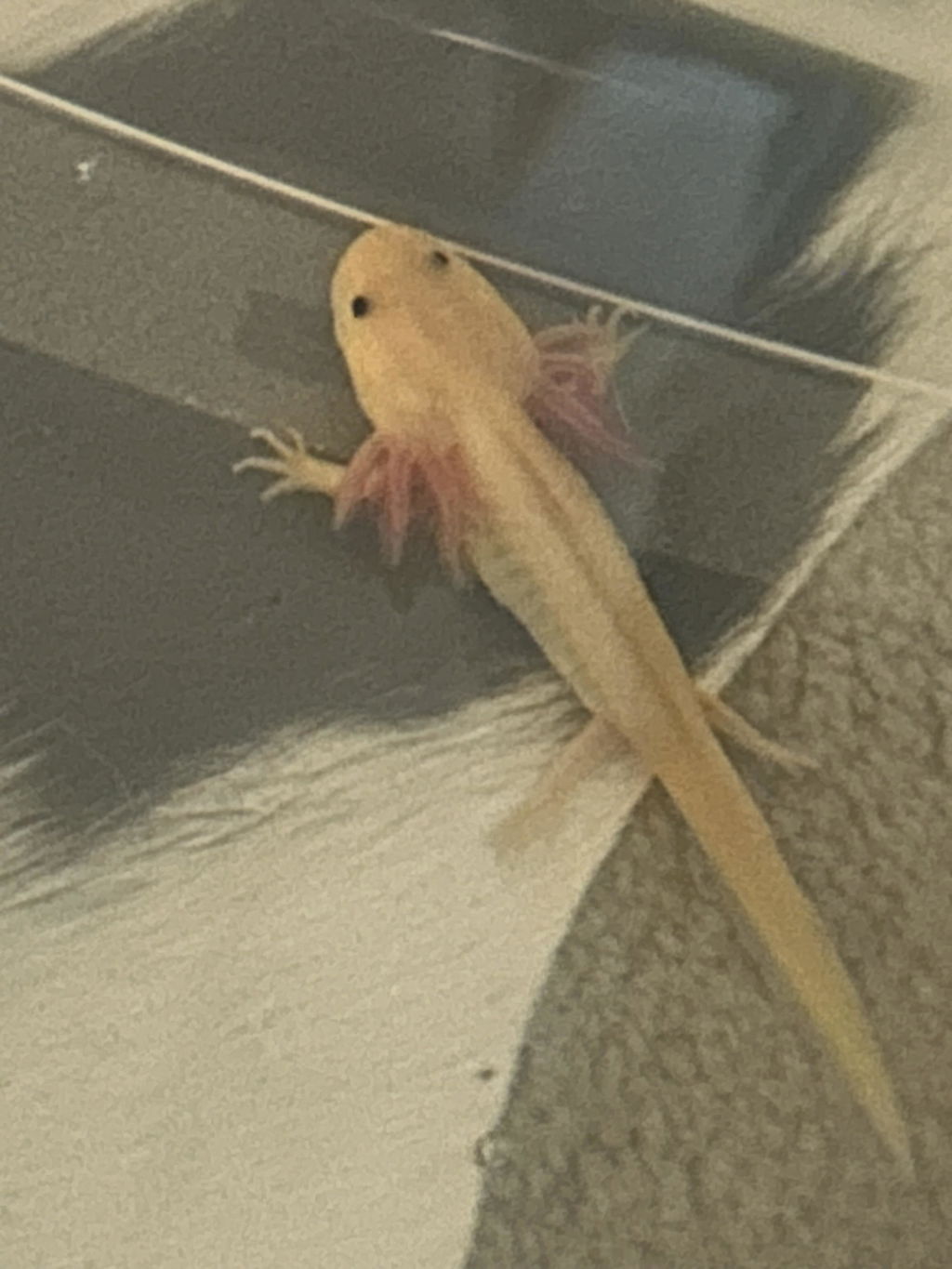
Axolotl Care at a Glance
- Tank size: A properly maintained aquarium with adequate floor space, filtration, and water volume.
- Water temperature: Keep water cool and stable; the Ambystoma Genetic Stock Center maintains axolotls at about 60–65°F and advises against temperatures above about 72°F.
- Ammonia: 0 ppm.
- Nitrite: 0 ppm.
- Nitrate: Preferably below 20 ppm.
- pH: Approximately 6.5–8.0.
- Filtration: Effective, gentle, low-flow filtration.
Tank Size and Long-Term Housing
Axolotls spend most of their time on the bottom, so usable floor space, stable water quality, and gentle filtration matter more than tank height alone. Larger aquariums provide more water volume and can make temperature and waste management easier.
Read our complete axolotl tank setup guide and browse our axolotl habitat setup collection.
Cycle the Aquarium Before Adding an Axolotl
A new aquarium must complete the nitrogen cycle before an axolotl is introduced. Beneficial bacteria process toxic ammonia into nitrite and then nitrate.
Before introducing your axolotl, confirm ammonia is 0 ppm, nitrite is 0 ppm, nitrate is present but controlled, chlorine and chloramine have been removed, and temperature is stable.
Keep the Water Cool
Axolotls are cold-water amphibians. The Ambystoma Genetic Stock Center reports maintaining axolotls at about 60–65°F (15–18°C) and advises that they should not be kept above about 72°F (22°C). Keep the aquarium away from direct sunlight, heaters, and other heat sources.
Depending on room temperature, an aquarium fan, air conditioning, or a properly sized chiller may help maintain stable water.
For more detail, read our axolotl water temperature guide.
Maintain Safe Water Parameters
- Ammonia: 0 ppm
- Nitrite: 0 ppm
- Nitrate: Preferably below 20 ppm
- pH: Approximately 6.5–8.0
- Chlorine/chloramine: 0 ppm
Use an aquarium conditioner that treats chlorine and chloramine whenever tap water is added. Stable water chemistry is more important than constantly chasing a specific pH.
Use Gentle Filtration
Axolotls produce noticeable waste, so filtration needs to be effective without creating a strong current. Sponge filters, baffled hang-on-back filters, and properly adjusted canister filters can all work when flow is gentle.
Substrate, Hides and Plants
A bare bottom or carefully chosen substrate can work. Avoid loose gravel and small stones that could be swallowed. Provide at least one smooth hide and avoid sharp decorations or openings that could trap the animal.
Hardy live plants can add cover and create a more natural environment. Browse our Axolotl Safe Plants for aquarium-ready options.
What Do Axolotls Eat?
Axolotls are carnivores. Earthworms or nightcrawlers, live blackworms, and quality sinking pellets are common foods. Read our axolotl feeding guide or our live blackworms guide.
Tank Mates
Axolotls do not need companions. Fish may nip external gills, compete for food, introduce disease, or be swallowed. Read our Axolotl-Safe Tank Mates guide before adding anything to the aquarium.
Routine Maintenance
- Check water temperature daily.
- Observe appetite, gills, skin, and behavior.
- Remove visible waste and uneaten food promptly.
- Test ammonia, nitrite, nitrate, and pH regularly.
- Perform partial water changes as needed to maintain stable water quality.
- Confirm the filter is operating with gentle flow.
Signs of Stress or Illness
Watch for prolonged refusal to eat, white or cotton-like growth, red or irritated skin, open sores, severe swelling, persistent uncontrolled floating, loss of balance, rapid gill deterioration, significant weight loss, abnormal posture, or difficulty moving.
Start by checking water parameters and temperature. Contact an exotic or aquatic veterinarian when symptoms are severe or persist.
How Long Do Axolotls Live?
Axolotls can be long-term pets. Read our axolotl lifespan and long-term care guide before bringing one home.
Our Commitment to Responsible Care
Axolotl Superstore focuses on responsible husbandry, animal welfare, biosecurity, customer education, and continued support before and after purchase.
Need help preparing your aquarium? Browse our axolotl habitat supplies, water-care essentials, available axolotls, or contact us.
This guide is educational and is not a substitute for veterinary diagnosis or treatment.