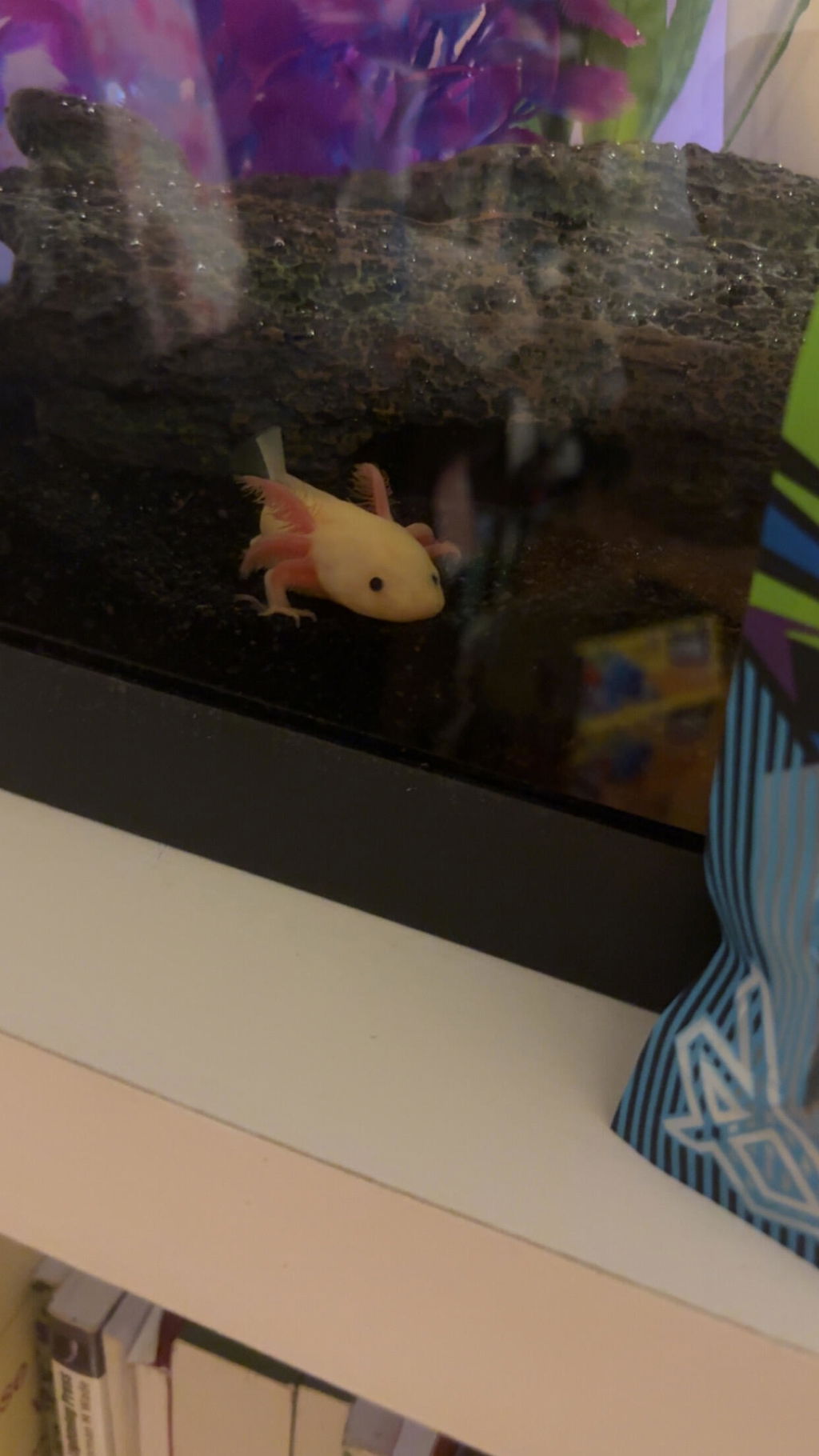
Setting up an axolotl aquarium correctly before the animal arrives is one of the most important parts of successful care. The goal is a fully cycled, cool, low-flow freshwater aquarium with enough floor space and water volume to keep conditions stable.
Choose an Appropriate Axolotl Tank
Axolotls spend most of their time on the bottom, so usable floor space matters. Choose an aquarium large enough for the animal to turn, walk, rest, and use hides comfortably, with enough water volume to maintain stable temperature and water quality.
Larger water volume is generally easier to keep stable than very small aquariums. If you are choosing between tank shapes, prioritize horizontal floor space over height.
See our axolotl tank setup checklist for a shopping and preparation list.
Keep the Water Cool
Axolotls are cold-water amphibians. The Ambystoma Genetic Stock Center maintains axolotls at about 60–65°F (15–18°C) and advises against temperatures above about 72°F (22°C).
Keep the aquarium away from direct sunlight, heating vents, and other heat sources. Depending on the room, an aquarium fan, air conditioning, or a properly sized chiller may be useful. Read our water temperature guide for more detail.
Cycle the Tank Before Your Axolotl Arrives
Do not add an axolotl to a newly filled, uncycled aquarium. The nitrogen cycle establishes beneficial bacteria that process waste.
Before adding the animal, test the aquarium and confirm:
- Ammonia: 0 ppm
- Nitrite: 0 ppm
- Nitrate: controlled with testing and water changes
- Chlorine/chloramine: treated with a suitable water conditioner
- Temperature: cool and stable
Use Gentle Filtration
Axolotls produce significant waste but do not appreciate strong current. Sponge filters and other low-flow filtration options can work well when sized and maintained appropriately. If a filter creates too much flow, use a spray bar, baffle, or other method to diffuse the current.
Choose Safe Substrate and Décor
A bare bottom or fine aquarium sand can work well. Avoid gravel and small stones that could be swallowed. Provide smooth hides and avoid décor with sharp edges or openings that could trap the animal.
Add Axolotl-Safe Plants
Hardy plants that tolerate cool water and lower light can add cover and help create a natural-looking aquarium. Browse our axolotl-safe plants for current options.
Prepare Food and Water-Testing Supplies
Have a reliable liquid water test kit, water conditioner, thermometer, and appropriate food ready before the axolotl arrives. Common foods include earthworms or nightcrawlers, live blackworms, and appropriately sized sinking axolotl pellets.
Read our axolotl feeding guide for more detail.
Maintain the Aquarium Consistently
Check temperature and behavior daily, remove visible waste and uneaten food promptly, test ammonia, nitrite, nitrate, and pH regularly, and complete partial water changes as needed to keep conditions stable.
When Is the Tank Ready?
Your aquarium is ready when the nitrogen cycle is established, ammonia and nitrite remain at 0 ppm, temperature is consistently cool, the filter is operating with gentle flow, and you have the necessary food and testing supplies on hand.
Once the setup is stable, browse our available captive-bred axolotls or review our complete axolotl care guide.