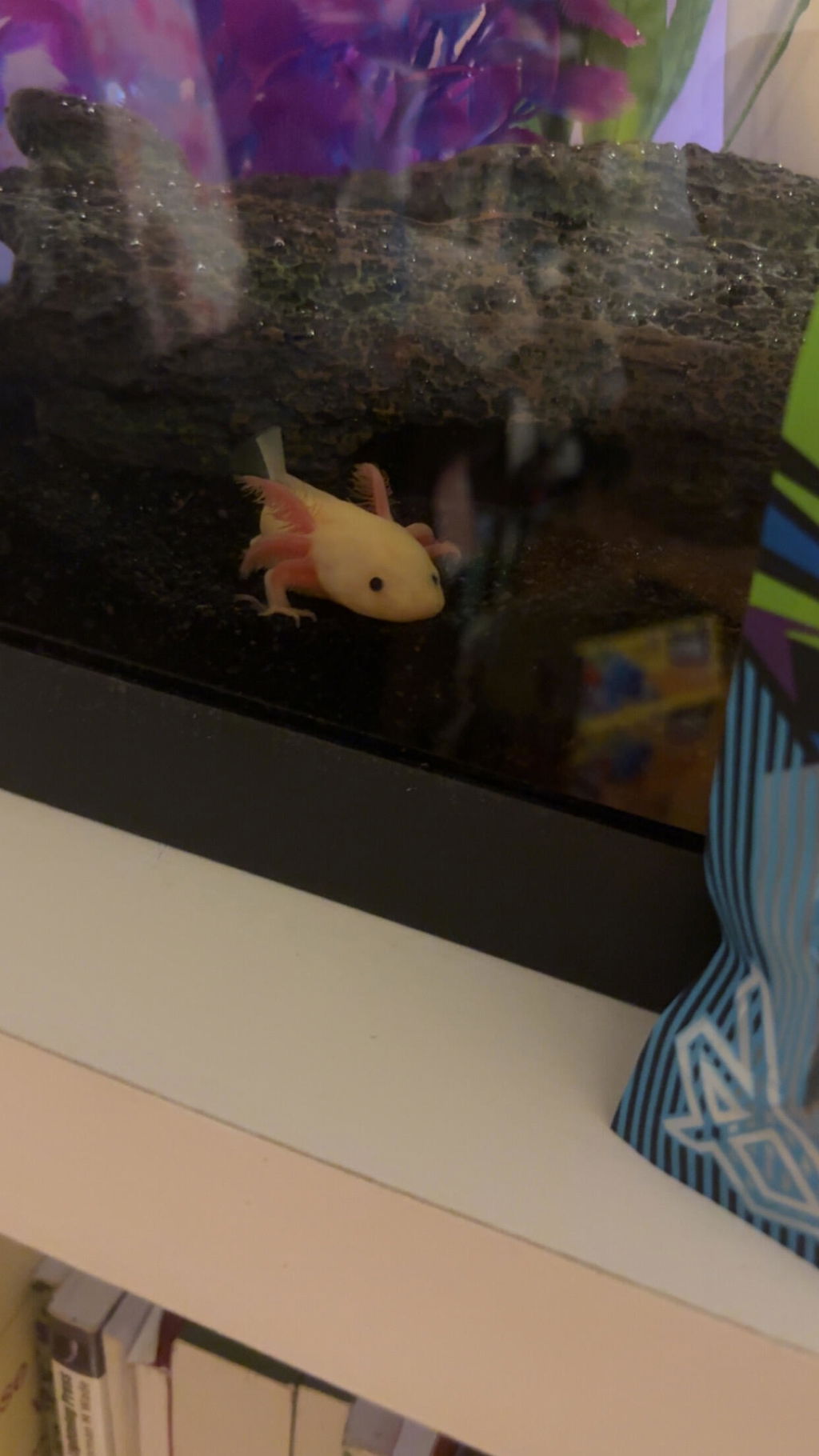
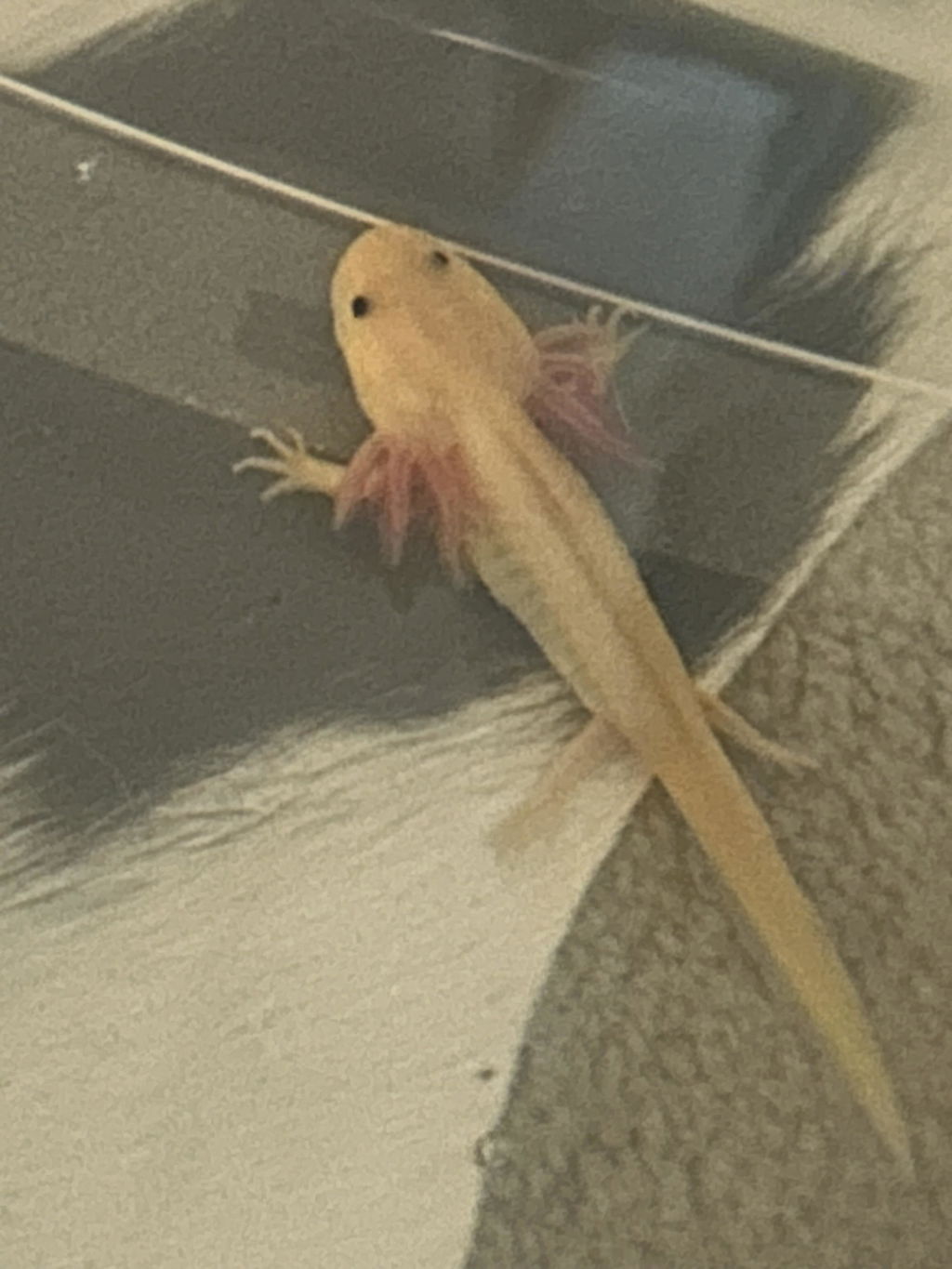
Axolotl care for beginners starts with one thing: stable, cool, fully cycled water. Axolotls are aquatic salamanders with delicate skin and external gills, so water quality, temperature, filtration, and feeding matter more than decorative aquarium features.
Axolotl Care at a Glance
- Water temperature: about 60–65°F (15–18°C) is a commonly recommended cool range.
- High-temperature warning: avoid prolonged temperatures above about 72°F (22°C).
- Ammonia: 0 ppm.
- Nitrite: 0 ppm.
- Nitrate: keep controlled with testing and water changes.
- Filtration: effective biological filtration with gentle flow.
- Tank setup: provide adequate floor space, water volume, hides, and room for maintenance.
Tank Size and Setup
Choose an aquarium that provides adequate floor space and enough water volume to maintain stable water quality. Larger water volume generally makes temperature and chemistry easier to keep stable than very small aquariums.
Use a secure lid, thermometer, smooth hides, gentle filtration, and either a bare bottom or fine aquarium sand. Avoid gravel or stones small enough to swallow.
Use our axolotl tank setup checklist for a step-by-step preparation guide.
Water Temperature
Axolotls are cold-water amphibians. The Ambystoma Genetic Stock Center maintains axolotls at about 60–65°F (15–18°C) and advises against temperatures above about 72°F (22°C). Keep the aquarium away from direct sunlight, heaters, and other heat sources.
Read our axolotl water temperature guide for cooling options and warning signs.
Cycle the Aquarium Before Adding an Axolotl
The nitrogen cycle establishes beneficial bacteria that process waste. Before adding an axolotl, test the aquarium and confirm ammonia and nitrite are both 0 ppm. Use a conditioner that treats chlorine and chloramine whenever tap water is added.
Filtration and Maintenance
Axolotls produce significant waste but do not appreciate strong current. Use effective low-flow filtration, remove visible waste and uneaten food promptly, test the water regularly, and complete partial water changes as needed to keep conditions stable.
What Do Axolotls Eat?
Axolotls are carnivores. Common captive foods include earthworms or nightcrawlers, live blackworms, and appropriately sized sinking axolotl pellets. Feeding frequency depends on age, size, temperature, and body condition.
See our complete axolotl feeding guide or browse axolotl food.
Handling and Tank Mates
Routine handling should be avoided because axolotls have sensitive skin and delicate external gills. Axolotls also do not require companions. Fish can nip gills, compete for food, introduce disease, or become prey.
Read our axolotl tank mates guide before adding another animal.
Signs That Need Attention
Watch for prolonged refusal to eat, unusual floating, rapid gill deterioration, white or cotton-like growth, skin sores, severe swelling, loss of balance, or significant weight loss. Check temperature and water parameters first, and contact an experienced exotic or aquatic veterinarian when symptoms are severe or persistent.
Beginner Axolotl Care Checklist
- Cycle the aquarium before the axolotl arrives.
- Keep water cool and stable.
- Maintain 0 ppm ammonia and 0 ppm nitrite.
- Use gentle biological filtration.
- Provide at least one smooth hide.
- Feed appropriately sized animal-based foods.
- Remove waste and uneaten food promptly.
- Test the water regularly.
Ready to Choose an Axolotl?
Once your aquarium is fully cycled and stable, browse our captive-bred axolotls for sale. If you are still deciding whether an axolotl is right for you, read our Axolotls as Pets guide.