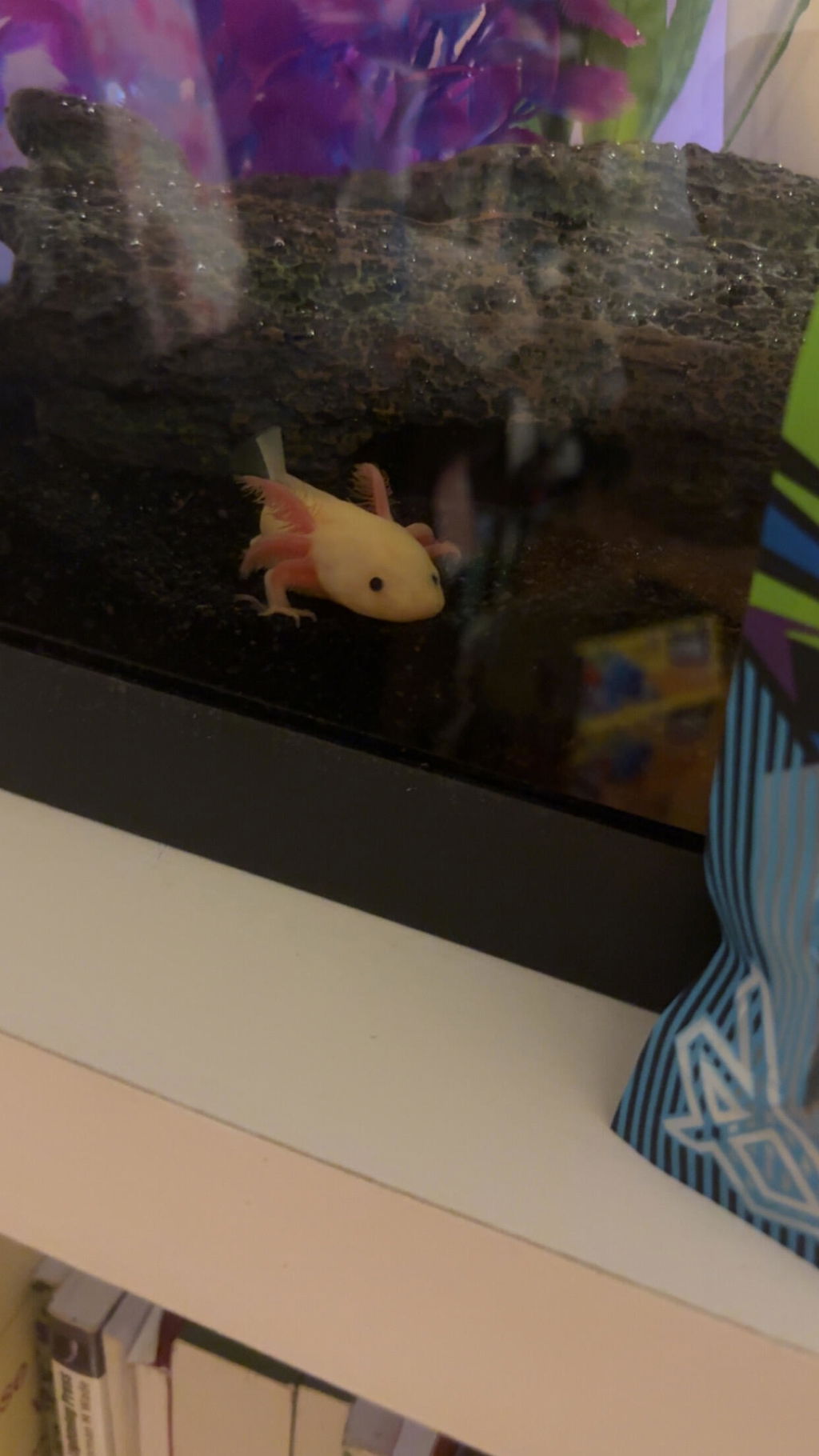
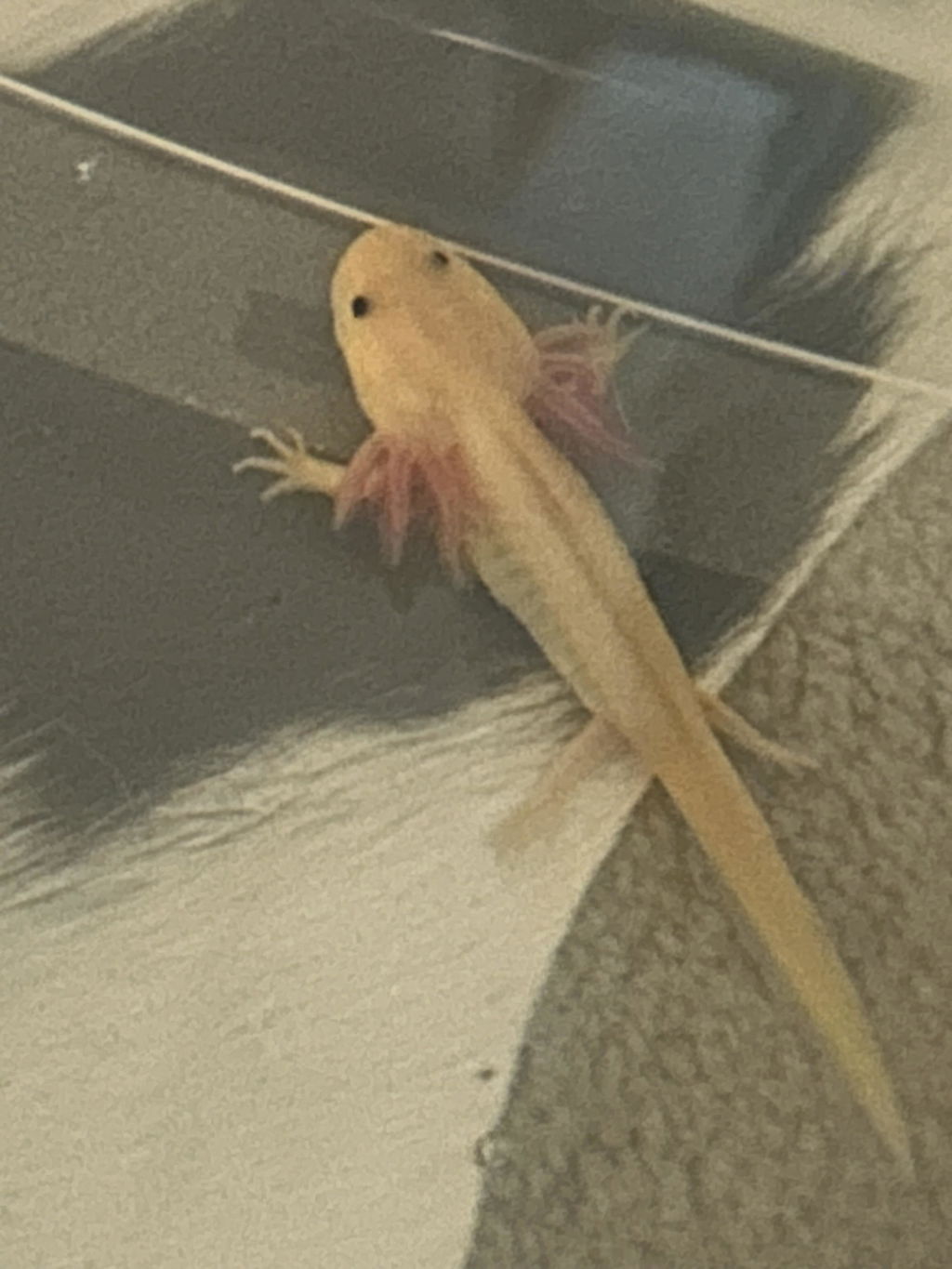
Axolotls change quite a bit as they grow. A small juvenile has different nutritional needs, feeding habits, and care requirements than a full-grown adult. Understanding your axolotl’s size can help you determine how often to feed, what foods to offer, and what to expect as your axolotl matures.
One of the biggest differences between young and adult axolotls is feeding frequency. Smaller axolotls are growing quickly and generally need to eat more often, while larger adults have slower growth and can usually go longer between meals.
Juvenile Axolotls: Approximately 3–5 Inches
Juvenile axolotls are in an active growth stage and typically require more frequent feeding than larger animals. At this size, their bodies are putting a significant amount of energy into growth, so regular access to nutritious food is important.
Most juveniles can be offered food once a day, although very young or rapidly growing axolotls may eat smaller portions more frequently. The goal is to provide enough nutrition for steady growth without leaving uneaten food in the aquarium.
Good foods for juvenile axolotls include appropriately sized earthworms or nightcrawlers, live blackworms, quality axolotl pellets, and other nutritionally appropriate foods.
Because juveniles eat frequently, it is especially important to remove leftover food and monitor water quality. More feeding can mean more waste, which can quickly affect ammonia and nitrate levels if the aquarium is not properly maintained.
Sub-Adult Axolotls: Approximately 5–8 Inches
Once an axolotl reaches the sub-adult stage, growth generally begins to slow compared with the juvenile stage.
Many sub-adults do well when fed every day or every other day, depending on their size, appetite, body condition, and the amount of food offered at each meal.
At this stage, whole or appropriately portioned nightcrawlers and earthworms can become a major part of the diet. Worms are one of the best staple foods for axolotls because they provide excellent nutrition and encourage natural feeding behavior.
You may notice your axolotl becoming less interested in eating every single day as it grows. That can be completely normal. A healthy, well-fed sub-adult does not necessarily need the same feeding schedule it followed when it was only a few inches long.
Adult Axolotls: Approximately 8 Inches and Larger
Adult axolotls generally need to be fed less frequently than juveniles.
A healthy adult axolotl will often do well with a substantial meal about two to three times per week. Some adults may prefer slightly different schedules depending on temperature, activity level, body condition, and individual appetite.
This is one reason larger axolotls can actually be easier to maintain from a feeding standpoint. Instead of needing daily meals, a full-grown adult can typically consume larger portions less frequently.
Nightcrawlers and earthworms are excellent staple foods for adult axolotls. High-quality axolotl or carnivore pellets can also be incorporated into the diet.
The important thing is not to continue feeding an adult simply because it ate daily when it was younger. Overfeeding can contribute to excess waste, poor water quality, and unnecessary weight gain.
Adult Male vs. Adult Female Axolotls
Male and female axolotls generally have similar basic nutritional requirements, although adult females can sometimes develop a broader or rounder body shape.
Sex alone should not determine how much you feed. Instead, look at the axolotl's overall body condition, appetite, activity, and size.
A useful general visual guideline is that the widest part of an axolotl's body should be reasonably proportionate to the width of its head. Adult females can naturally appear somewhat broader, so body shape should be considered along with appetite and overall condition.
How Big Do Axolotls Get?
Most adult axolotls reach approximately 8 to 12 inches in length, although individual size can vary based on genetics, nutrition, environment, and age.
Some axolotls may remain somewhat smaller, while exceptionally large individuals can exceed the typical range. Axolotls usually experience their fastest growth while young. Growth gradually slows as they approach adulthood, which is another reason their feeding requirements decrease with age.
Does a Bigger Axolotl Need More Food?
A larger axolotl can eat a larger meal than a juvenile, but that does not necessarily mean it needs to eat more often.
Think of feeding in terms of both portion size and frequency. A juvenile may eat a small amount every day because it is growing quickly. An adult may eat several large pieces of earthworm during one meal but then not require another feeding for several days.
Signs You May Be Feeding Too Much
Overfeeding can create problems both for the axolotl and the aquarium. Uneaten food decomposes, while additional food consumption produces additional waste.
Watch for excessive weight gain, frequently ignored food, large amounts of leftover food, or deteriorating water quality. If your adult axolotl consistently refuses a meal after recently eating, it may simply not be hungry yet.
However, sudden or prolonged appetite loss can also be associated with stress, temperature problems, water-quality issues, or illness and should not automatically be attributed to age.
Signs You May Need to Feed More
Young axolotls should maintain steady growth and healthy body condition. If a juvenile appears unusually thin or is consistently very eager for food immediately after meals, its feeding amount may need to be adjusted.
Every axolotl is different, so feeding schedules should be treated as a starting point rather than a strict rule.
A Simple Axolotl Feeding Guide
| Axolotl Size | Life Stage | Typical Feeding Frequency |
|---|---|---|
| 3–5 inches | Juvenile | About once daily |
| 5–8 inches | Sub-Adult | Daily to every other day |
| 8+ inches | Adult | About 2–3 times per week |
These are general guidelines. Aquarium temperature, individual metabolism, food type, portion size, and body condition can all affect how often an axolotl needs to eat.
What Is the Best Food for Axolotls?
For most larger axolotls, earthworms and nightcrawlers are among the best staple foods available. They provide excellent nutrition and are easy to portion according to the size of the axolotl.
Live blackworms can be especially useful for smaller juveniles and can encourage natural hunting and feeding behavior. Quality axolotl pellets can also provide a convenient supplemental or staple option depending on the animal.
Regardless of the food you choose, make sure each piece is appropriately sized and remove anything that remains uneaten.
Choosing the Right Size Axolotl
When purchasing an axolotl, size can affect more than just appearance.
A juvenile axolotl allows you to watch your animal grow and develop but will generally require more frequent feeding.
A sub-adult axolotl is larger, more established, and often transitioning away from daily feeding.
An adult axolotl is already close to or at its mature size and generally requires fewer feedings each week.
There is no single best size for everyone. The right choice depends on whether you want to raise a young axolotl or prefer the lower feeding frequency and established size of an adult.
At Axolotl Superstore, many of our axolotl morphs are available as juveniles, sub-adults, adult males, and adult females, allowing you to select the size that best fits what you are looking for.